'%3e%3cpath%20d='M112.379%201.12192C112.379%200.75794%20112.219%200.393963%20111.919%200.201864C111.448%20-0.11156%20110.838%200.0299866%20110.528%200.464737L76.103%2048.7321C75.9429%2048.9545%2075.6027%2048.8433%2075.6027%2048.5703V1.13203C75.6027%200.768051%2075.4425%200.404074%2075.1423%200.211975C74.672%20-0.10145%2074.0615%200.0299866%2073.7513%200.474847L39.3266%2048.7422C39.1665%2048.9646%2038.8262%2048.8534%2038.8262%2048.5804V1.12192C38.8262%200.75794%2038.6661%200.393963%2038.3659%200.201864C37.8955%20-0.10145%2037.2851%200.0299866%2036.9749%200.464737L2.54012%2048.7321C2.38%2048.9545%202.03976%2048.8433%202.03976%2048.5703V1.03092C2.03976%201.03092%202.03976%200.939929%202.03976%200.899487C2.03976%200.848934%202.03976%200.788272%202.03976%200.737719C2.03976%200.666946%202.01974%200.596173%202.00973%200.525399C1.98972%200.464737%201.96971%200.404074%201.92968%200.333301C1.90966%200.292859%201.87964%200.252417%201.83961%200.211975C1.79958%200.171533%201.74955%200.141202%201.70952%200.120981C1.63947%200.0805389%201.57943%200.060318%201.51938%200.040097C1.44933%200.0198761%201.37928%200.00976562%201.30923%200.00976562C1.2592%200.00976562%201.19915%200.00976562%201.14912%200.00976562C1.10909%200.00976562%201.05905%200.00976562%201.01902%200.00976562C0.978994%200.00976562%200.928958%200.00976562%200.888929%200.00976562C0.838893%200.00976562%200.77885%200.00976562%200.728814%200.00976562C0.658763%200.00976562%200.588713%200.0299866%200.518663%200.040097C0.458619%200.060318%200.398576%200.0805389%200.328526%200.120981C0.288497%200.141202%200.248468%200.171533%200.20844%200.211975C0.168411%200.252417%200.138389%200.302969%200.108368%200.333301C0.0683388%200.404074%200.0483244%200.464737%200.02831%200.525399C0.00829564%200.596173%20-0.00171155%200.666946%20-0.0117188%200.737719C-0.0117188%200.788272%20-0.0117188%200.848934%20-0.0117188%200.899487C-0.0117188%200.939929%20-0.0117188%200.990481%20-0.0117188%201.03092V52.5842C-0.0117188%2052.9482%200.148396%2053.302%200.448612%2053.5042C0.91895%2053.8076%201.52939%2053.6761%201.83961%2053.2414L36.2744%204.974C36.4345%204.75157%2036.7747%204.86279%2036.7747%205.13577V52.5741C36.7747%2052.9684%2036.9649%2053.3526%2037.3051%2053.5346C37.4652%2053.6256%2037.6354%2053.666%2037.7955%2053.666C38.1157%2053.666%2038.4259%2053.5144%2038.6261%2053.2414L73.0508%204.974C73.2109%204.75157%2073.5512%204.86279%2073.5512%205.13577V52.5741C73.5512%2052.9684%2073.7413%2053.3526%2074.0816%2053.5346C74.2417%2053.6256%2074.4118%2053.666%2074.5719%2053.666C74.8921%2053.666%2075.2024%2053.5144%2075.4025%2053.2414L109.837%204.974C109.997%204.75157%20110.338%204.86279%20110.338%205.13577V52.6752C110.338%2052.6752%20110.338%2052.7662%20110.338%2052.8066C110.338%2052.8572%20110.338%2052.9178%20110.338%2052.9684C110.338%2053.0392%20110.358%2053.1099%20110.368%2053.1807C110.388%2053.2414%20110.408%2053.302%20110.448%2053.3728C110.468%2053.4133%20110.498%2053.4537%20110.538%2053.4941C110.578%2053.5346%20110.628%2053.5649%20110.668%2053.5851C110.738%2053.6256%20110.798%2053.6458%20110.858%2053.666C110.928%2053.6862%20110.998%2053.6963%20111.068%2053.6963C111.118%2053.6963%20111.178%2053.6963%20111.228%2053.6963C111.268%2053.6963%20111.318%2053.6963%20111.358%2053.6963C111.398%2053.6963%20111.448%2053.6963%20111.488%2053.6963C111.539%2053.6963%20111.599%2053.6963%20111.649%2053.6963C111.719%2053.6963%20111.789%2053.6761%20111.859%2053.666C111.919%2053.6458%20111.979%2053.6256%20112.049%2053.5851C112.089%2053.5649%20112.129%2053.5346%20112.169%2053.4941C112.209%2053.4537%20112.239%2053.4031%20112.269%2053.3728C112.309%2053.302%20112.329%2053.2414%20112.349%2053.1807C112.369%2053.1099%20112.379%2053.0392%20112.389%2052.9684C112.389%2052.9178%20112.389%2052.8572%20112.389%2052.8066C112.389%2052.7662%20112.389%2052.7156%20112.389%2052.6752V1.12192H112.379Z'%20fill='black'%20/%3e%3c/g%3e%3cdefs%3e%3cclipPath%20id='clip0_1827_67485'%3e%3crect%20width='114'%20height='54'%20fill='white'%20/%3e%3c/clipPath%3e%3c/defs%3e%3c/svg%3e)

Swinging A-Go-Go: Wang Shui-Ho, A Boundary Crosser of His Time
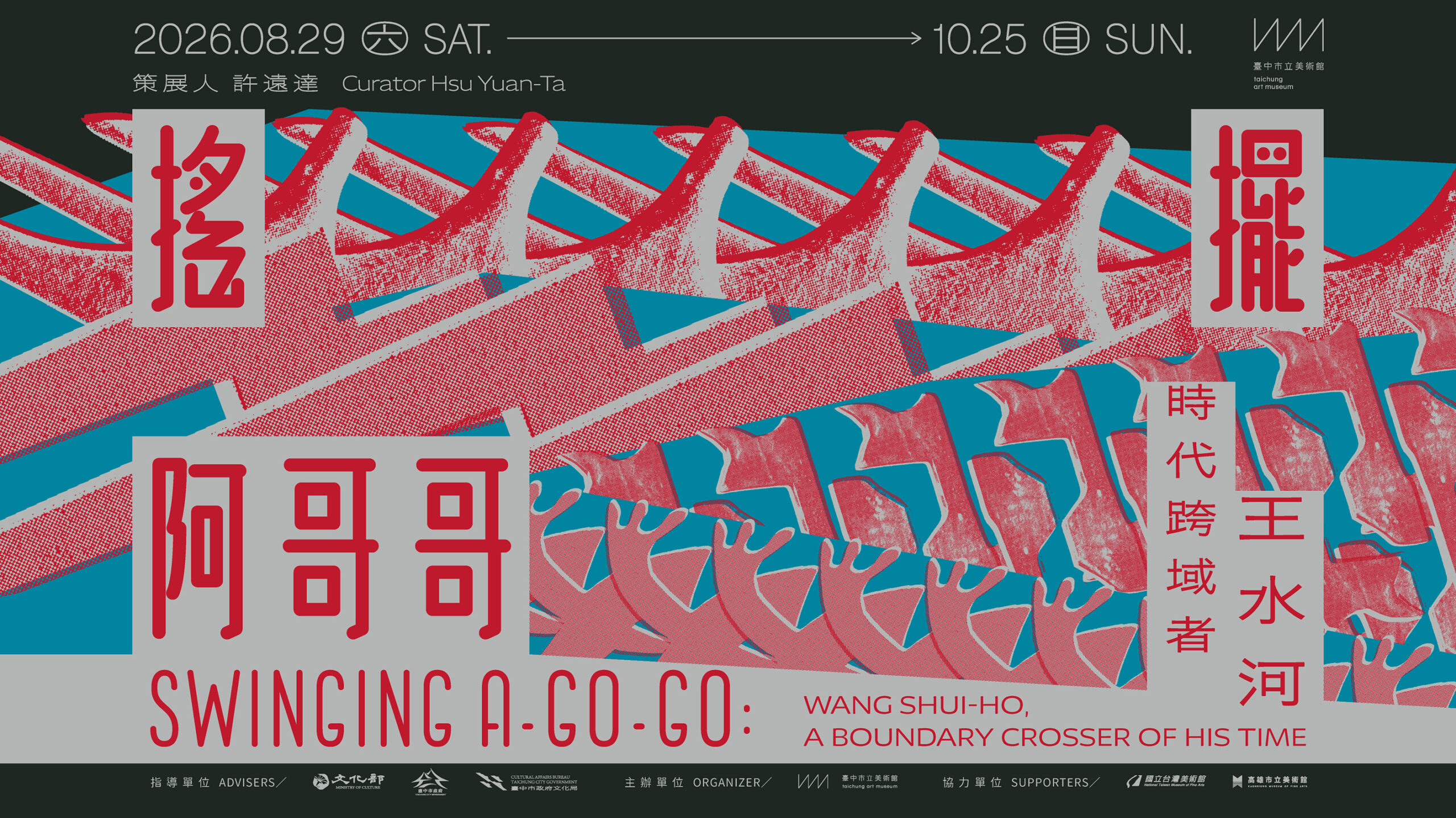
2026/08/29 - 2026/10/25
Taichung Art Museum|Exhibition room D, E
Swinging A-Go-Go: Wang Shui-Ho, A Boundary Crosser of His Time
Wang Shui-Ho (1925–2019), after graduating from Akebono Public School (now Taichung Elementary School), began his career in signboard painting. Throughout his life, he witnessed intertwining developments in Taiwan’s art and culture, including Shōwa Modernism (昭和モダン) before World War II, the post-war modernization movement in Taiwanese art, modern art shaped by the U.S. aid program, and the pop culture of Go-go dance. In 1947, thanks to Chang Hsing-Chien (張星建) of the Central Bookstore (中央書局), Wang met the renowned sculptor Chen Hsia-Yu (陳夏雨). This encounter marked the start of his exploration of fine art, with a particular and consistent dedication to the possibilities of sculpture and modernity.
The blend of Japanese, Chinese, and passionate American modern styles shaped the popular cultural ambiance of post-war Taiwan, evident in everyday signage, dance halls, and cinemas. During this period, Wang’s “Shui-Ho Art Studio” (水河畫房), founded in 1946, thrived. His work extended beyond movie billboards, advertising design, and shop signs, branching into typography, graphic and interior design, furniture, lighting, and architecture. He created highly recognizable typefaces, such as the “Shui-Ho Type” (水河體), and trained more than 400 apprentices. His distinctive modernist style spread throughout greater Taichung, and his architectural designs can be found across Taiwan.
The term “A-go-go” in the exhibition title is derived from the lively music and dance styles of 1960s America and was used in post-war Taiwan as a general term for Western pop dance culture. At that time, the extensive presence of U.S. military forces in Taiwan brought Western music into local cafés, dance halls, and radio stations, inspiring the younger generation to emulate American popular culture and sparking a widespread trend.
This exhibition, rooted in the Wang Shui-Ho art archive research launched by the Taichung Art Museum in 2024, uses document collections and oral histories to continually map out his creative journey across art, design, and architecture, forming a crucial foundation for this curatorial effort. This exhibition is organized into five thematic sections: “The Modern Times: Typography, Advertising, and Visual Design,” “The Journey of Fine Art,” “Modern Interiors: Interior, Furniture, and Light Fixture Design,” “Wang Shui-Ho’s Modern Architectural Legacy,” and “Shui-Ho-Sai in Everyday Life.” Together, these sections highlight Wang Shui-Ho’s creative practice across art, design, and architecture, underscoring his active role in shaping the modern era of swinging A-go-go in post-war Taiwan.
I. The Modern Times: Typography, Advertising, and Visual Design
In the 1930s, Japan saw the rise of a pop culture that blended Japanese and Western styles amid a booming consumer society pursuing modernization. This period is commonly known as “Shōwa Modan” (昭和モダン), or “Shōwa Modernism.” After graduating from Akebono Public School, Wang Shui-Ho began working at a signboard shop. During this vibrant period, when Shōwa Modernism was at its peak, he absorbed the visual language of modernity. After World War II, he established the “Shui-Ho Art Studio” (水河畫房). His successful hand-painted cinema-billboard business flourished, and he trained more than 400 apprentices.
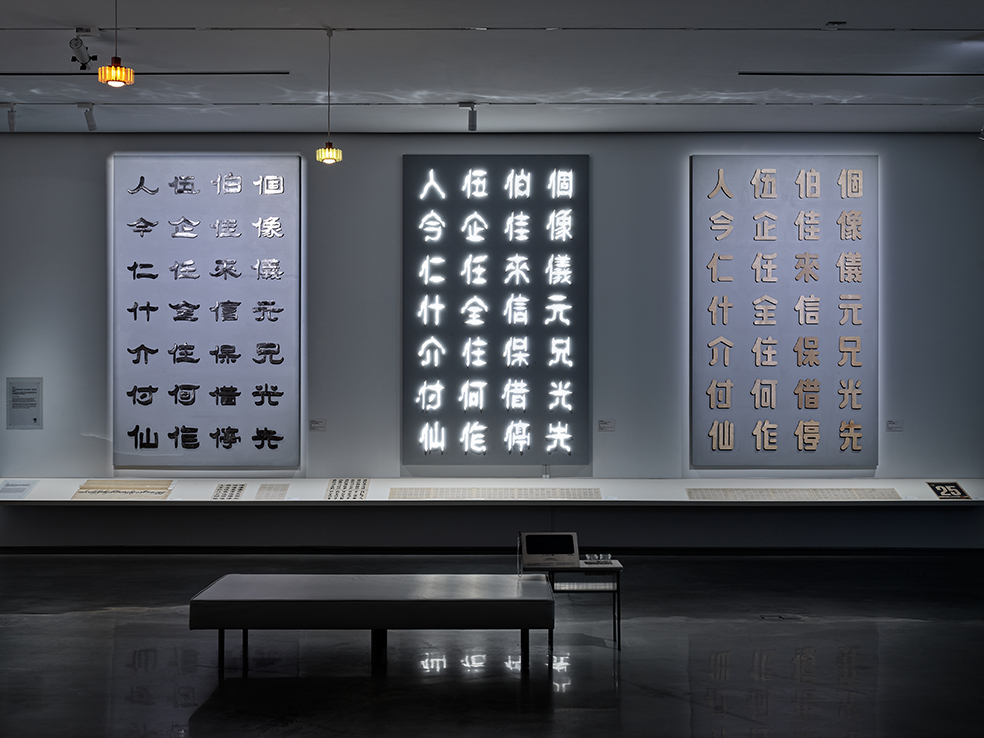
In the post-war period, Wang’s aesthetic sensibility responded keenly to the cultural landscape shaped by the new regime—particularly its Chinese-style modernity, the “Shanghai Modern” style, and the avant-garde pop culture introduced through the U.S. aid program. This blend is evident in his typographic designs. His most comprehensive typographic systems include the “Shui-Ho Rounded Typeface” (水河圓體), the standard “Shui-Ho Typeface” (水河體; also called the “Sweet Potato Typeface”), and the “Shui-Ho Clerical Script Typeface” (水河隸書體). Among them, the “Shui-Ho Round Typeface” not only conveys a sleek, strong sense of modernism that reflects the era’s modernity but also features a more compact, centered structural composition with a graphic quality. In contrast, the “Shui-Ho Typeface” (“Sweet Potato Typeface”) is derived primarily from traditional clerical script. Its distinct graphic quality and artistic contours have made it one of Wang’s most iconic typefaces.
His signage, graphic design, and spatial identity work prominently feature simplified shapes and Western alphanumeric characters, reflecting post-war modernist design principles. Meanwhile, simplified traditional Chinese totems, influenced by the modernization movement in Chinese art and the aesthetics of Shanghai Modern, appear frequently in his interior, exterior, and graphic designs. Many street signs and advertisements in Taichung during this period were either created by him or heavily influenced by his style. As a result, he became a leading figure in modern design, earning prestigious titles such as “Grandmaster” and “Shui-Ho-sai” (meaning “Master Shui-Ho”) in the advertising world.
II. The Journey of Fine Art
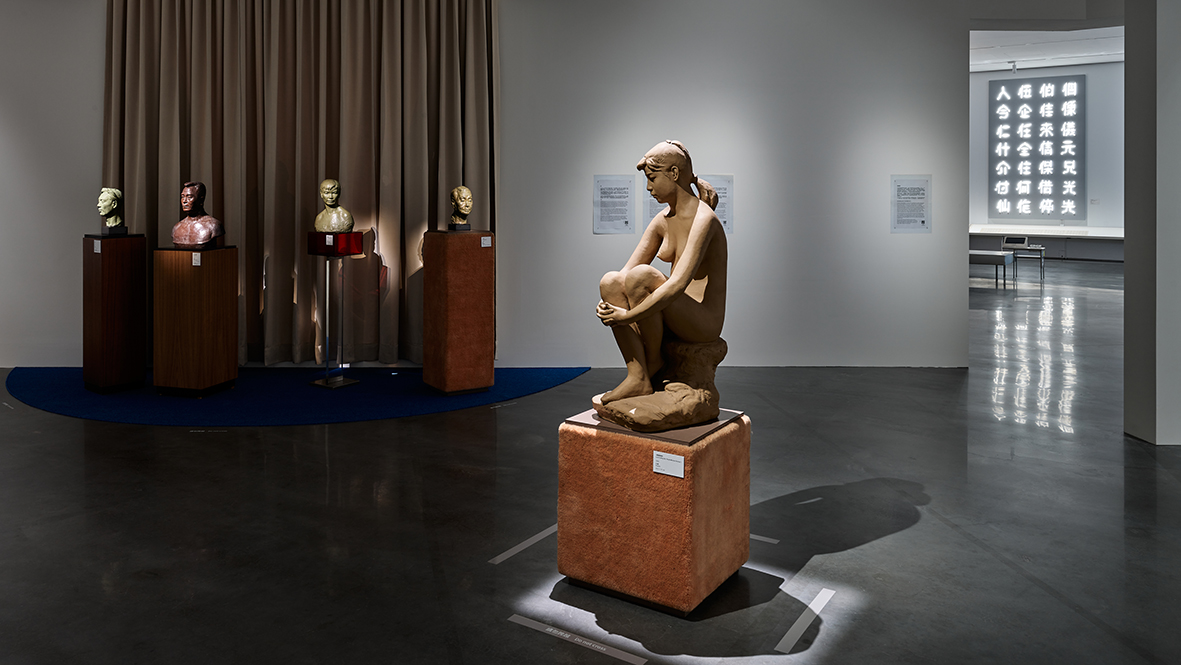
In his journey of fine art, Wang Shui-Ho is best known for his sculptures. In 1949, his bust, titled Man, received the Chairman Award for Sculpture at the 4th Taiwan Provincial Fine Art Exhibition (also known as the Provincial Exhibition). Between then and 1960, he won the First Prize in Sculpture at the Provincial Exhibition six times, and was granted review-exempt status in 1960.
His path into sculpture was self-taught, beginning in 1947 with a portrait bust of his father. Afterward, he was introduced to the renowned sculptor Chen Hsia-Yu by Chang Hsing-Chien of the Central Bookstore, which officially launched his career in fine art and prompted a lifelong exploration of realist sculpture and modernity. Without formal academic training, Wang relied heavily on external references. Consequently, adjudicated and award-winning works at the Provincial Exhibitions became a crucial source of artistic inspiration for him. In addition, his close relationships with artists and intellectuals such as Yen Shui-Long, Lin Chih-Chu, Pu Tien-Sheng, and Chang Shen-Chieh further enriched his creative thinking. His sculptures did not strictly adhere to realism and also explored modern forms. For example, his public sculpture, Bā lěi shuang shū (meaning “Two Ballerinas,” 1957, now removed), created for Taichung Park’s main entrance, was rendered in an abstract style. His use of raw lacquer as a casting medium is a notable feature of his work, highlighting the diversity and openness of his artistic materials.
Though entirely self-taught, Wang possessed a remarkable talent for observation and a mastery of form, skillfully capturing his subjects’ essence and spirit in realist portrait sculpture. His sculptures consistently won top prizes in Taiwan’s leading art competitions. After earning review-exempt status, he also served as a juror for the Provincial Exhibition, helping uphold its aesthetic standards. This dedicated pursuit of fine art was a vital and nourishing source for Wang as a boundary-crossing artist.
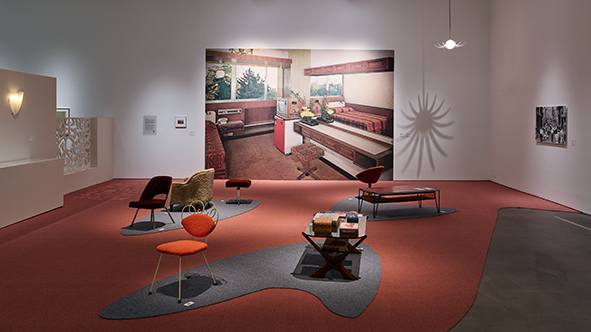
III. Modern Interiors: Interior, Furniture, and Light Fixture Design
Wang Shui-Ho’s interior spaces are charmingly defined by material diversity, modern geometric forms, and a fusion of traditional Chinese motifs, all underpinned by an independent, cohesive interior design philosophy. During a period when modernity was highly valued, clients eagerly sought Wang’s expertise and interior work. Because most of his projects were public leisure venues, clients who had visited the famous Nanye Dance Hall and various cinemas and hotels designed by Wang often waited in long lines, eager to collaborate with him.
Wang’s core interior philosophy centered on material diversity, reflecting his boundless curiosity and openness to materials such as wood, metal, glass, and even acrylic—an emerging material at the time. In 1963, he became an art consultant for Chi Mei Corporation, founded by Hsu Wen-Lung, known as the “Father of Acrylic in Taiwan.” That year also saw the establishment of a specialized department for acrylic artistic light fixtures at Shui-Ho Art Studio. Acrylic sheets from Chi Mei Corporation became an important material for Wang, who actively experimented with their potential uses.
After World War II, the general pursuit of modernity made sleek, geometric designs popular as symbols of cutting-edge taste. As Wang’s work evolved after the war, he began to incorporate Chinese influences. Yet his approach to Chinese aesthetics did not manifest in traditional pavilions and pagodas; instead, he transformed these elements into simple, modern forms. His interior design style showcased a cohesive, enveloping unity born of independent design concepts, materialized through spatial layouts with embedded furniture evoking natural grottos, as well as split-level features and geometric patterns on doors, windows, and light fixtures. Collectively, these features defined his signature aesthetic.
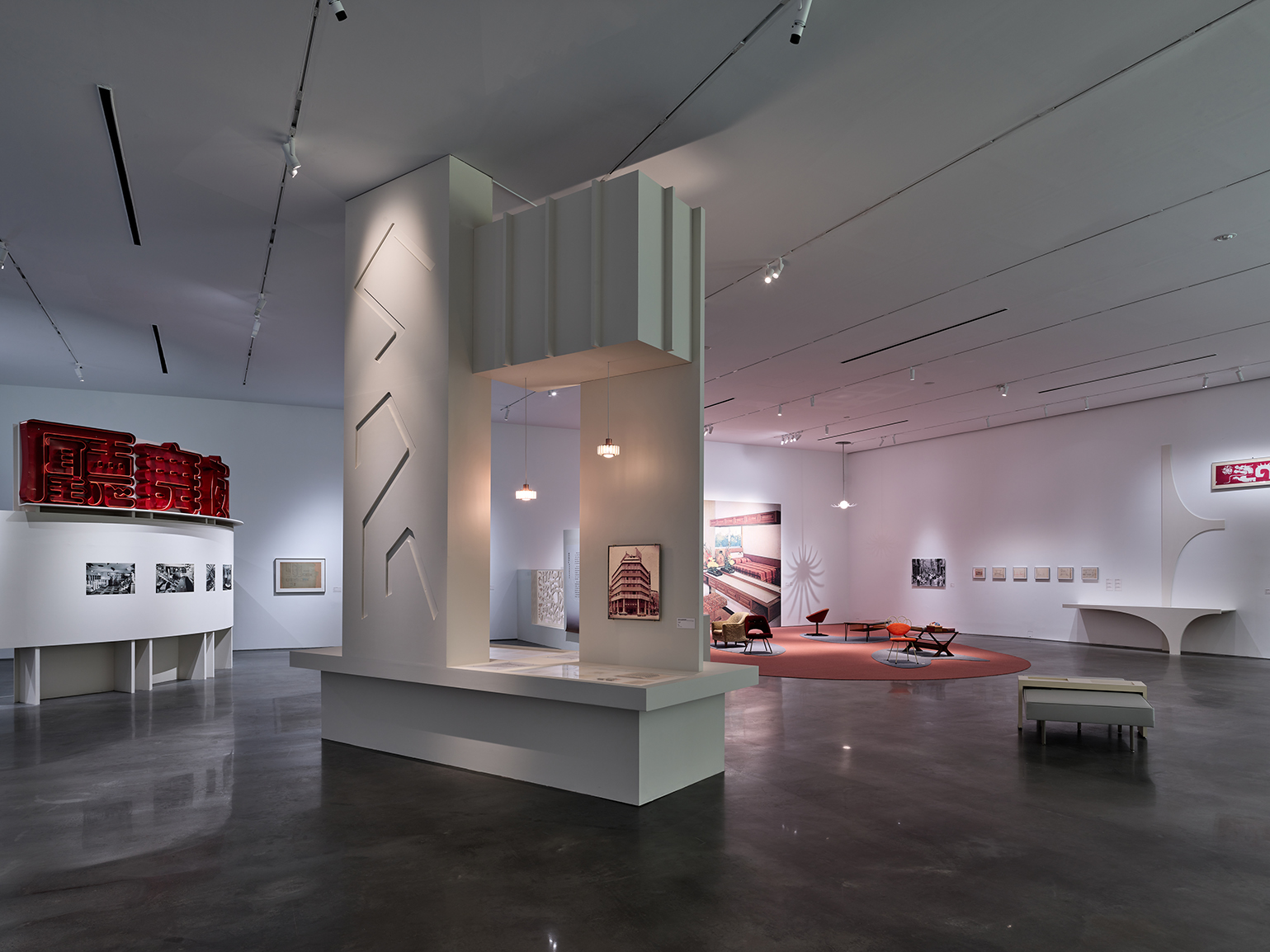
IV. Wang Shui-Ho’s Modern Architectural Legacy
Wang Shui-Ho’s career showcases a broad, interdisciplinary creative force, akin to the Bauhaus concept of Gesamtkunstwerk, or Total Art, expressed across various media. He began by producing innovative movie billboards, which attracted the interest of commercial owners and led him to gradually expand into customized furniture and light fixture design. His work then progressed to comprehensive interior architecture and ultimately to full-scale architectural projects. Being entirely self-taught, Wang’s ideas were deeply influenced by Frank Lloyd Wright (1867–1959), whose modern architectural principles he absorbed and transformed into a unique personal language.
Respectfully known as Shui-Ho-sai (literally “Master Shui-Ho”), he designed buildings with distinctively modern geometric profiles. For example, the Tunghai Theater, reopened in 1956, featured an undulating façade that echoed its name (literally “East Sea”) through marine imagery. The Xibei (meaning “Northwest”) Hotel, opened in 1966, offered an even more complete articulation of his modern geometric forms and façade vocabulary. Sleek, succinct geometric straight lines, juxtaposed with curved corners, geometric decorative symbols on the façade, and architectural friezes with abstract, rhythmic contours define Wang’s signature architectural style.
Wang’s architectural practice was closely collaborative with his eldest son, architect Wang Wen-Fang. After obtaining his architect’s license in 1968, Wang Wen-Fang drew most of the architectural blueprints, with Wang Shui-Ho providing key visual edits and refinements. In 1969, the father and son established the “Shui-Ho Architecture Firm,” combining Wang’s extensive design background with the son’s formal architectural expertise.
In the 1950s, Wang’s avant-garde cinema billboard style attracted many investors, leading to commissions for architectural projects. The Prince Hotel in Kaohsiung, with its modern exterior, became a symbol of high-end luxury in the city and a landmark design that brought Wang recognition across Taiwan. Along with the unified modern style of the Nanye Dance Hall in the 1960s, the Shui-Ho Architecture Firm continued to thrive even after Wang withdrew from the public eye following a cancer diagnosis in 1971, leaving behind a legacy of hotels and private homes throughout Taiwan.
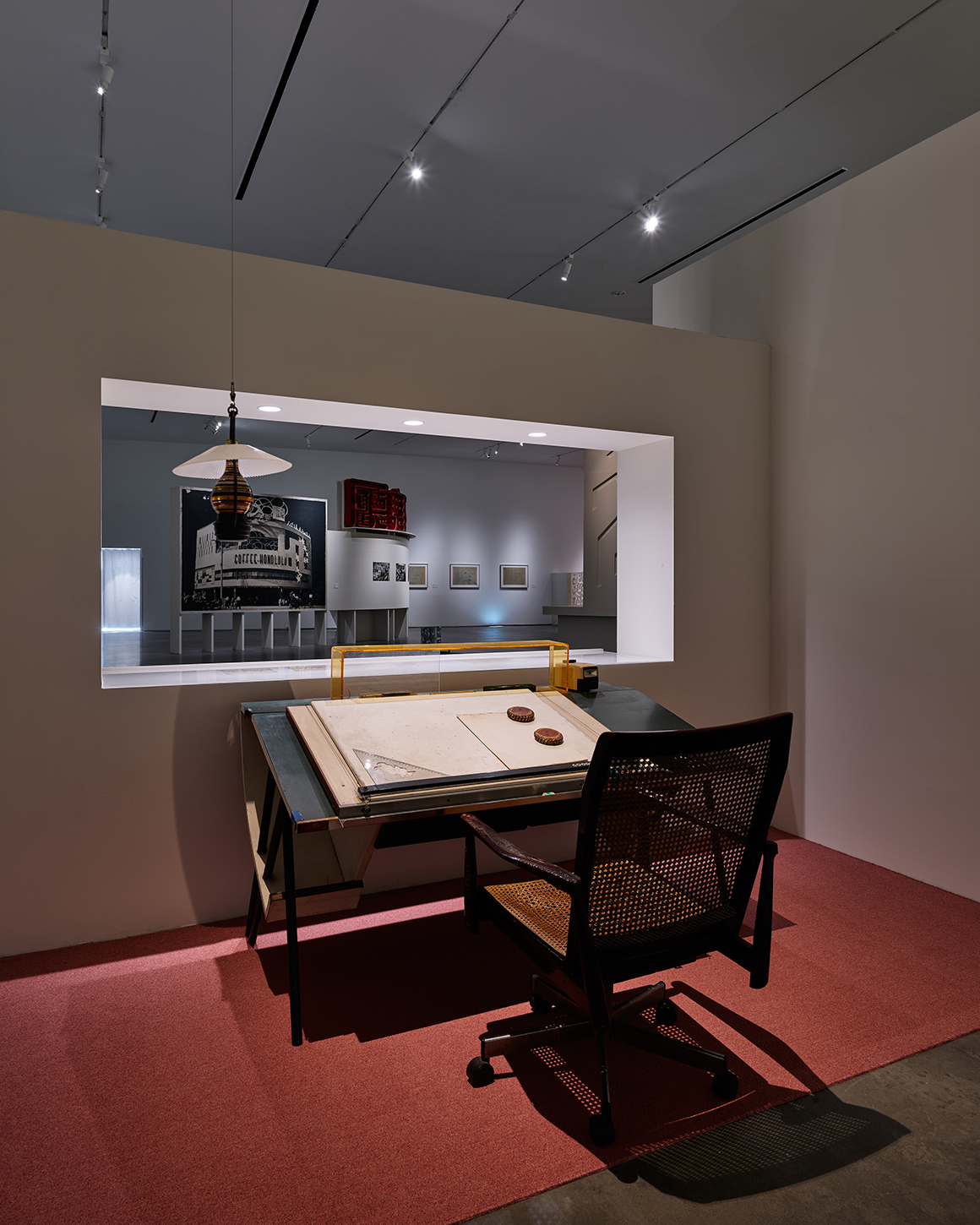
V. Shui-Ho-Sai in Everyday Life
Wang Shui-Ho’s creative career spanned from cinema billboards and commercial advertising to interior, furniture, and total architectural design, consistently reflecting a deep influence of modernist style. Meanwhile, his lifestyle aligned closely with this aesthetic. Every few years, he would carry out major updates to the interior of his family home. These included installing large interior mirrors to create a sense of space, as well as early features such as massive floor-to-ceiling glass panes in his bathrooms and custom-made light fixtures. He embodied his modernist design principles personally, experiencing them directly in his daily life and family environment.
This gallery showcases personal artifacts from Wang’s home life, using everyday objects to tell his story. Photographs of his daily routines, his self-portrait sculptures, painted self-portraits, and the handcrafted portfolio he created when nominated for “Ten Outstanding Young Persons” (1965) form a personal autobiography of his life and career. A modernist approach is evident on every page of this portfolio. The titles feature his minimalist, geometric “Shui-Ho Rounded Typeface,” offering a clean, spacious visual layout. His painted self-portraits display geometric facets that reflect a strong modernist influence, while his self-portrait busts from various periods capture his appearance at different stages of his life. Through these images of memory, everyday objects, and his own self-statements, this section reveals the intimate aspects of Shui-Ho-sai’s daily life.
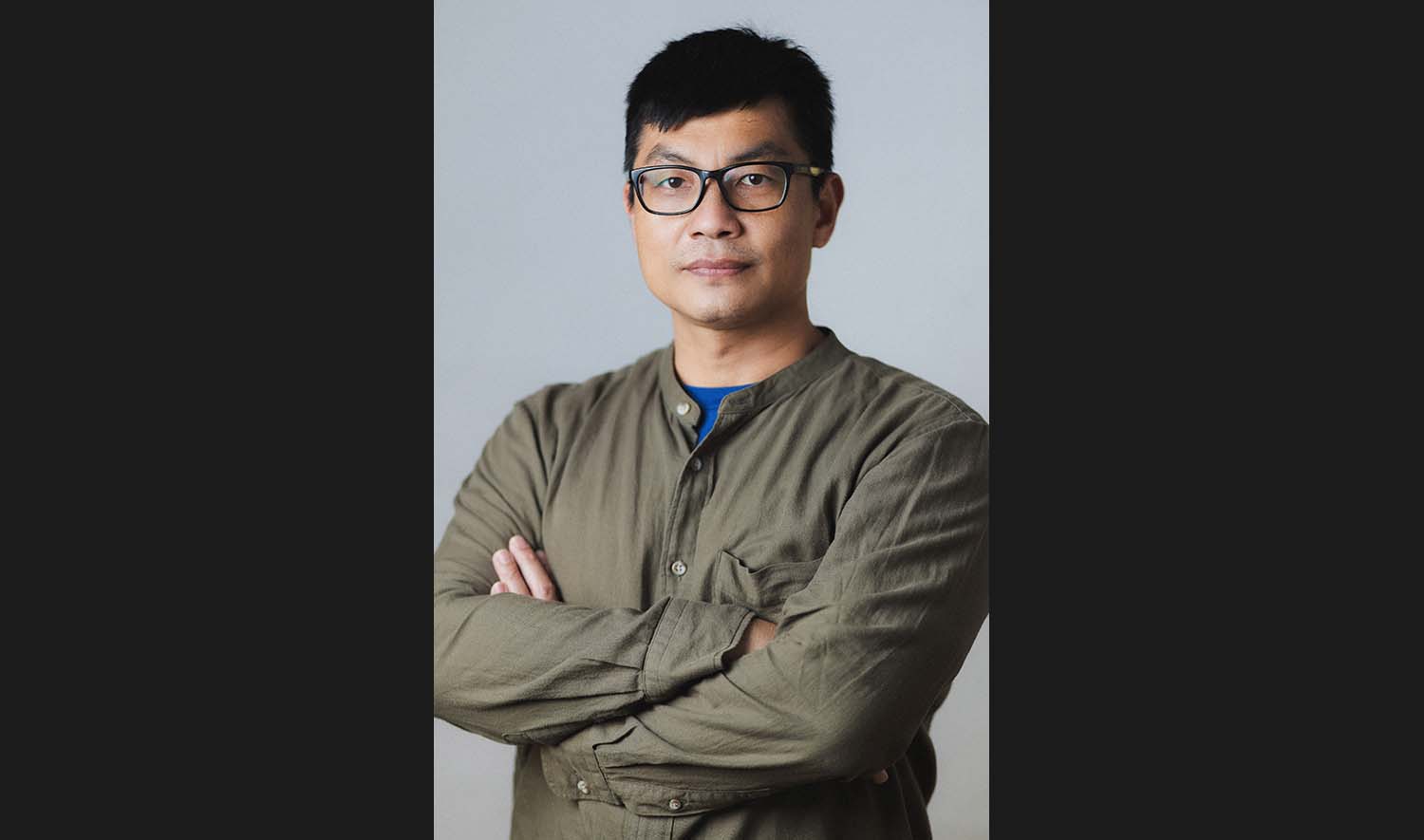
Curator : Hsu Yuan Ta
Born in Yilan, Taiwan, in 1973, currently lives and works in Tainan, Taiwan. He is an Assistant Professor in the Department of Art History and Cultural Heritage at Tainan National University of the Arts.
Dr. Hsu received his Ph.D. from the Doctoral Program in Fine Arts at Texas Tech University. His doctoral dissertation, Memories and Identities: Hsiang Chou in the Photographic Works of Lang Jing-Shan and Chen Shun-Chu, examines the intersections of photography, memory, and cultural identity. He received his M.A. in Art Criticism from the Graduate Institute of Art History and Art Criticism at Tainan National University of the Arts in 2004.
His research interests focus on contemporary art criticism in Taiwan, the history of Taiwanese art, Taiwanese sculpture, photography criticism and research, and the local art history of Tainan.
As a curator, Dr. Hsu has organized and curated numerous exhibitions addressing the history, development, and cultural contexts of Taiwanese art. His major curatorial exhibitions include New Frontier – An Investigation of an Art Tribe around Wusanto Reservoir (PA, 2004); Sweet Memories – Soulangh International Contemporary Art Festival (SCP, 2016); Evoke: The Revealed Taiwanese Subjectivity (ASA, 2016); the Sui Generis: Jing-Pai of Taiwan series I–III (2018–2019); TAKAO. TAIKE. SOUTHERN HUE: JIUNSHYAN LEE (KMFA, 2021); Great Migrations: Lu Ming-Te (TFAM, 2021); Places of Being: Space and Materiality in Taiwan’s Avant-Garde Art, 1980–2021 (NTMoFA, 2021); Materializing the Spirit: The Epic of Pu Tian-Sheng’s Taiwanese Luminary Busts (CAM, 2023); and Tuā-íng Khàm Huān (PCAM, 2026).
His curatorial practice is closely concerned with the historical narratives, regional identities, and artistic practices that have shaped Taiwan’s modern and contemporary art. Through exhibitions and research, he explores the relationships between artistic production, local histories, cultural memory, and the formation of Taiwanese subjectivity.
Selected Works
Title
Copybook for Shui-Ho Rounded Typeface
Year
1940–1950
Medium
Paper
Dimensions
39.1 × 27.1 cm